
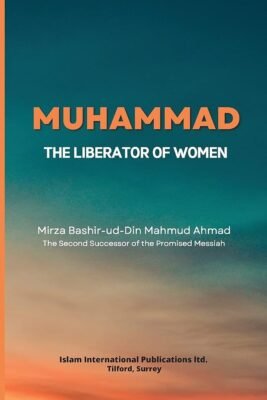
Muhammad the Liberator of Women by Hazrat Mirza Bashir-ud-Din Mahmud Ahmad is a thought-provoking book that examines the status, rights, and dignity of women in Islam. The book highlights the teachings of the Holy Prophet Muhammad (peace and blessings of Allah be upon him) and explains how his message brought significant changes to the social and spiritual position of women. It challenges common misconceptions about the role of women in Islam and emphasizes the importance of justice, respect, and human dignity.
Summary of the Book
The central theme of this book is that the teachings of the Holy Prophet Muhammad (peace and blessings of Allah be upon him) established important principles concerning women’s rights and freedom. The author discusses the position of women in societies before the advent of Islam and contrasts it with the rights and protections emphasized in Islamic teachings.
One of the key subjects explored in the book is women’s dignity and independence. The author explains that women should not be treated as property and highlights their rights within marriage, family life, and society. The discussion also emphasizes women’s rights concerning marriage, divorce, inheritance, and personal well-being.
Another important theme is the spiritual status of women. The book explains that women, like men, have the opportunity to develop spiritually, perform good deeds, and attain nearness to God. Their worth is not determined merely by their social position or relationship with men, but also by their faith, character, and actions.
The author further argues that the teachings and example of the Holy Prophet Muhammad transformed attitudes towards women and provided a religious foundation for their social, physical, and spiritual development.
Critical Analysis
One of the main strengths of this book is its focus on women’s rights as an important subject within Islamic teachings. The author presents a clear religious argument and encourages readers to look beyond cultural practices when examining the position of women in Islam. This distinction is particularly important because cultural traditions do not always reflect the principles taught by a religion.
The book is also valuable because it addresses issues that remain relevant today, including gender equality, marital rights, women’s dignity, and freedom from exploitation. It encourages readers to reflect on whether social attitudes and practices uphold the principles of justice and respect.
Another strength is its concise and accessible presentation. Rather than offering an extensive academic history, the book concentrates on its central argument and provides readers with an introduction to the author’s understanding of the Prophet Muhammad’s contribution to women’s rights.
However, readers seeking a comprehensive historical or comparative study may wish to consult additional academic sources. The book primarily presents a religious perspective and does not extensively examine the diversity of interpretations and historical experiences across Muslim societies. Comparing its arguments with other scholarly perspectives could provide a broader understanding of the development and application of women’s rights.
Relevance to Contemporary Society
The message of Muhammad the Liberator of Women remains relevant in contemporary discussions about women’s dignity, equality, and social participation. Issues such as forced marriage, discrimination, unequal treatment, and the denial of educational opportunities continue to affect women in different parts of the world.
The book encourages readers to consider how religious principles can be applied to promote justice, protect individual dignity, and strengthen family and social relationships. It also reminds readers that genuine respect for women requires more than words; it must be reflected in actions, responsibilities, and fair treatment.
Conclusion
In conclusion, Muhammad the Liberator of Women is an informative and thought-provoking book that explores the position of women through the teachings of the Holy Prophet Muhammad (peace and blessings of Allah be upon him). It emphasizes women’s dignity, marital and social rights, and opportunities for spiritual development.
Although readers interested in a broader historical analysis may benefit from consulting additional sources, the book offers a clear introduction to the author’s perspective on women’s rights in Islam. Its central message encourages reflection on justice, compassion, respect, and the responsibilities of individuals and society towards women.
Overall, this book is recommended for readers interested in Islamic teachings, women’s rights, and the historical and religious discussions surrounding gender and dignity. It provides an opportunity to reflect on how religious principles can contribute to a more just and respectful society