
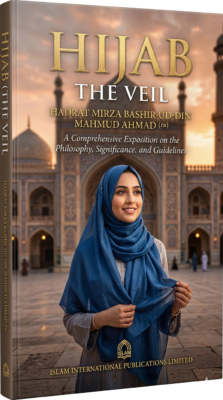
Hijab (The Veil) by Hazrat Mirza Masroor Ahmad is an insightful religious book that explores the significance of hijab in Islam. It discusses the importance of modesty, the principles of purdah, and the role of Islamic teachings in guiding Muslims’ daily lives. Through a collection of selected addresses, the author explains the religious and moral dimensions of hijab and responds to common misunderstandings and criticisms surrounding the veil.
Summary of the Book
The central theme of the book is that hijab represents more than a form of clothing; it is connected to modesty, dignity, self-discipline, and religious commitment. The author explains hijab within the broader framework of Islamic teachings and emphasizes the relationship between outward appearance and inner character.
The book also addresses questions about the purpose of the veil and its place in contemporary society. It presents the author’s understanding of Quranic guidance on modesty and encourages readers to consider hijab from a religious and ethical perspective rather than judging it solely by its outward appearance.
Another important aspect of the book is its response to criticism of hijab. It seeks to clarify misconceptions and explain why the practice holds spiritual significance for those who observe it. In doing so, the book invites readers to reflect on the relationship between faith, personal values, and social expectations.
Critical Analysis
One of the book’s main strengths is its clear religious focus. The author presents his perspective in a manner intended to help readers understand the spiritual and moral reasoning behind hijab. The subject is relevant to discussions about religious identity, modesty, women’s clothing, and the expression of faith in modern society.
The book is particularly useful for readers who wish to explore the Ahmadiyya Muslim community’s interpretation of Islamic teachings on hijab. Its discussion of common criticisms can also help readers understand how religious arguments are used to explain and defend the practice.
However, readers seeking a comprehensive academic study of hijab may wish to consult additional sources. The book primarily presents a particular religious perspective rather than a comparative analysis of the different interpretations found across Muslim communities. A broader discussion of historical developments, cultural differences, and contemporary women’s experiences would provide further context.
Nevertheless, the book offers a focused contribution to the religious discussion of hijab and encourages readers to examine the values and beliefs associated with the practice.
Conclusion
In conclusion, Hijab (The Veil) is a valuable read for those interested in Islamic teachings on modesty, religious identity, and the significance of the veil. It presents the author’s perspective on hijab as a practice connected with faith, dignity, and moral responsibility.
Although readers looking for a wider academic discussion may benefit from consulting other perspectives, this book provides a useful introduction to the author’s understanding of hijab and its place in religious life. It encourages thoughtful reflection on the meaning of modesty and the relationship between personal beliefs and outward practices.
Overall, I would recommend this book to readers interested in Islamic religious literature and discussions about hijab, particularly those seeking to understand the perspective presented by its author.