

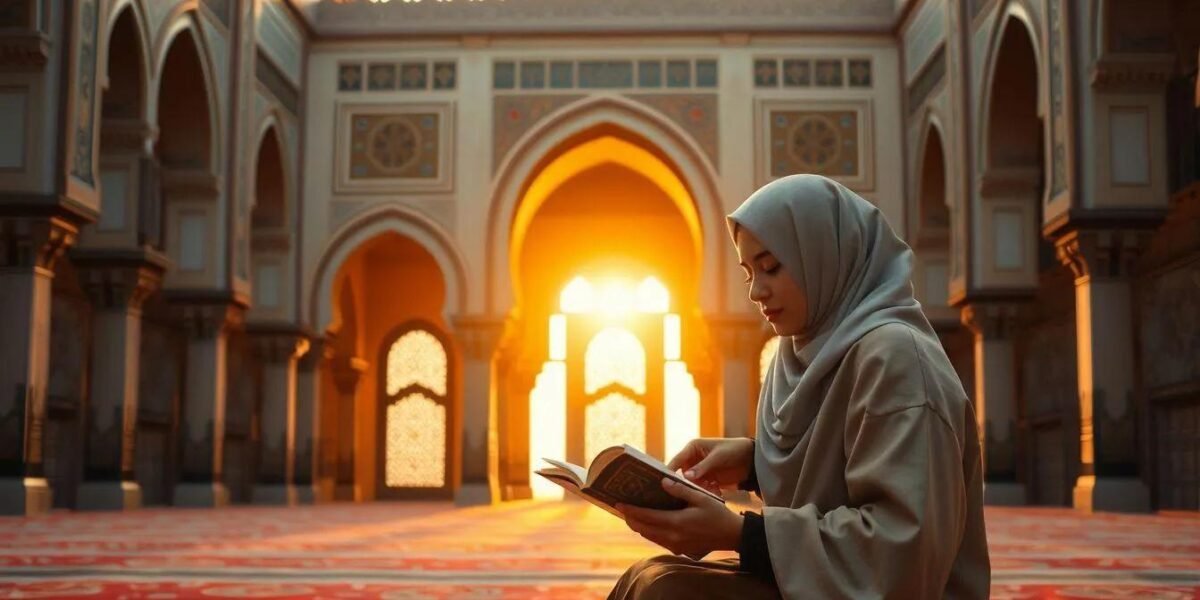
The world we live in is temporary. Every human being, regardless of wealth, social status, nationality, gender, or position, will eventually leave this world. According to Islamic belief, the present universe will one day come to an end, and all human beings will be resurrected to stand before Allah Almighty for the Day of Judgment.
This event is known as Yawm al-Qiyamah (The Day of Resurrection).
The subject of the End Times occupies an important place in Islamic teachings. The Holy Qur’an and the authentic Sunnah of Prophet Muhammad (peace be upon him) describe the temporary nature of worldly life, the signs preceding the Last Day, the resurrection of humanity, and the final accountability of every individual before Allah.
In today’s world, humanity faces numerous challenges, including conflict, injustice, dishonesty, family breakdown, materialism, moral confusion, and the rapid transformation of society. These circumstances remind Muslims of the importance of faith, righteousness, patience, and preparation for the Hereafter.
Within this context, Muslim women have an important role and responsibility. As mothers, daughters, wives, educators, professionals, and members of society, women contribute significantly to the moral, spiritual, and educational development of future generations.
Islam teaches that every individual, male or female, is responsible for their own faith and actions. Women should therefore understand their religious responsibilities, strengthen their relationship with Allah, educate their families, and contribute positively to society.
This article explores the Islamic understanding of the End Times and the responsibilities of Muslim women in preparing themselves and their communities for the Hereafter.
1. Understanding the End of the World According to Islam
Islam teaches that the present world will not exist forever. Everything in creation belongs to Allah, and everything will ultimately return to Him.
Allah says in the Holy Qur’an:
“Everyone upon the earth will perish, and there will remain the Face of your Lord, Owner of Majesty and Honor.”
(Surah Ar-Rahman, 55:26–27)
This verse reminds humanity that worldly existence is temporary. Wealth, beauty, power, reputation, and material possessions cannot provide permanent security.
The Day of Judgment will mark the end of the present worldly order and the beginning of the final stage of human accountability.
Muslims believe that on this day:
- All human beings will be resurrected.
- Every person will be accountable for their deeds.
- Their records of actions will be presented.
- Justice will be established by Allah.
- Nobody will be treated unjustly.
- Humanity will receive its final judgment according to Allah’s perfect knowledge and justice.
The awareness of Qiyamah should encourage Muslims to live responsibly rather than become overwhelmed by fear or speculation.
2. The Signs of the Last Day in Islam
The Prophet Muhammad (peace be upon him) informed his followers about signs that would occur before the Day of Judgment.
Islamic scholars generally classify these signs into two broad categories: minor signs and major signs.
Minor Signs
The minor signs are numerous, and some have been discussed by scholars in relation to historical and continuing developments.
Examples mentioned in authentic Islamic traditions include:
- The widespread spread of dishonesty and betrayal of trust.
- The loss of religious knowledge through the passing of scholars.
- The spread of ignorance.
- Increased competition in constructing tall buildings.
- The prevalence of killing and conflict.
- The increasing importance given to worldly wealth and status.
- The spread of social and moral corruption.
These teachings are reminders for believers to examine their own lives and strengthen their commitment to Islamic values.
It is important not to declare every modern political, economic, or social event to be a definite sign of the Last Day without reliable religious evidence.
Major Signs
Authentic Hadith literature describes several major signs preceding the Last Day.
Among those commonly discussed by Islamic scholars are:
- The appearance of Al-Mahdi, according to the relevant Hadith traditions.
- The emergence of the Dajjal (the False Messiah).
- The descent of Prophet Isa (Jesus), peace be upon him.
- The emergence of Ya’juj and Ma’juj (Gog and Magog).
- The appearance of the Beast of the Earth.
- The rising of the sun from the west.
- The appearance of the smoke.
- Three major landslides.
- A fire that will gather people towards their place of assembly.
The details and ordering of these signs are discussed in Islamic scholarship.
Muslims should remember that knowledge of the exact time of Qiyamah belongs exclusively to Allah.
Allah says:
“They ask you about the Hour: when is its arrival? Say, ‘Its knowledge is only with my Lord.'”
(Surah Al-A’raf, 7:187)
Therefore, Muslims should not become distracted by predictions, rumours, or unsupported claims about the date of the world’s end.
The most important responsibility is to prepare spiritually and morally.
3. Why Should Muslims Prepare for the Hereafter?
The purpose of learning about the End Times is not merely to understand future events. It is to remind us of our responsibilities in the present.
Every individual should ask:
- Am I fulfilling my obligations towards Allah?
- Am I performing my prayers regularly?
- Am I treating my parents and family with kindness?
- Am I earning and spending wealth honestly?
- Am I avoiding injustice and harming others?
- Am I helping people who are in need?
- Am I teaching my children good Islamic values?
- Am I prepared to answer for my actions before Allah?
The Prophet Muhammad (peace be upon him) taught that a person’s deeds are among the most important things they take into the Hereafter.
In Islam, preparation for Qiyamah means living a life of faith, sincerity, honesty, compassion, justice, and good conduct.
It is not enough to discuss the signs of the Last Day while neglecting the obligations of everyday life.
4. The Position and Honour of Women in Islam
Women hold an important and honoured position in Islam.
Islam recognises women as independent individuals with religious responsibilities, moral accountability, rights, and opportunities to perform good deeds.
Allah says:
“Indeed, the Muslim men and Muslim women, the believing men and believing women, the obedient men and obedient women, the truthful men and truthful women, the patient men and patient women … Allah has prepared for them forgiveness and a great reward.”
(Surah Al-Ahzab, 33:35)
This verse clearly establishes that spiritual reward and accountability are not restricted to men.
A Muslim woman can attain a high spiritual position through faith, worship, knowledge, good character, service to humanity, and obedience to Allah.
Her value is not determined solely by her appearance, marital status, wealth, or social position.
Islamic teachings recognise the dignity and spiritual worth of women as believers and servants of Allah.
5. The Responsibilities of Muslim Women in the Final Days of This World
In the context of the End Times, Muslim women have important responsibilities. These responsibilities are not separate from those of men; rather, they are part of the wider obligations shared by all Muslims.
A. Strengthening Faith and Maintaining a Relationship with Allah
The first responsibility of every Muslim woman is to establish and strengthen her relationship with Allah.
This includes:
- Performing the five daily prayers.
- Observing fasting during Ramadan.
- Reading and understanding the Holy Qur’an.
- Making Dua and remembering Allah.
- Seeking forgiveness and repenting sincerely.
- Maintaining modesty and good character.
- Fulfilling obligatory religious duties.
A woman’s spiritual strength should not depend entirely on her husband, parents, or other family members.
Every individual will ultimately stand before Allah and answer for their own deeds.
B. Acquiring Islamic Knowledge
Knowledge is essential for every Muslim, including women.
A Muslim woman should seek knowledge about:
- Islamic beliefs and Aqidah.
- The Qur’an and its teachings.
- The Sunnah of Prophet Muhammad (peace be upon him).
- Islamic worship and religious obligations.
- Family rights and responsibilities.
- Islamic ethics and moral conduct.
- The rights and responsibilities of women in Islam.
Education enables women to distinguish authentic Islamic teachings from misinformation, cultural practices, and unsupported religious claims.
Women should have opportunities to study with qualified scholars, attend Islamic educational programmes, read reliable books, and participate in beneficial discussions.
An educated Muslim woman can become a source of knowledge and guidance for her family and community.
C. Raising Children with Islamic Values
Motherhood is one of the important responsibilities through which many women contribute to society.
Children are influenced by their parents’ behaviour, values, habits, and attitudes.
In an increasingly complex world, Muslim mothers can play an important role in helping children develop:
- Faith in Allah.
- Love for the Qur’an and Sunnah.
- Respect for parents and elders.
- Honesty and trustworthiness.
- Compassion towards others.
- Responsibility and self-discipline.
- Awareness of right and wrong.
- Respect for people of different backgrounds.
However, child education is not solely the mother’s responsibility. Fathers and mothers share the duty of raising children with care, love, education, and religious guidance.
The family should work together to create an environment in which children can grow with strong moral and spiritual foundations.
D. Maintaining the Institution of Marriage and Family
Islam gives considerable importance to marriage and family life.
A healthy family should be built upon mutual respect, compassion, trust, justice, and responsibility.
Allah describes the relationship between spouses as one in which He has placed affection and mercy.
(Surah Ar-Rum, 30:21)
Muslim women should contribute to a peaceful and supportive family environment. At the same time, husbands must fulfil their responsibilities towards their wives and families.
Both spouses should avoid:
- Dishonesty and betrayal.
- Verbal and physical abuse.
- Unnecessary conflict.
- Financial irresponsibility.
- Neglect of children’s education.
- Disrespect and humiliation.
Marriage should be a partnership in which both individuals support one another in faith and in the challenges of worldly life.
E. Protecting Modesty, Dignity, and Good Character
Islam teaches modesty as an important quality for both men and women.
The Holy Qur’an instructs believing men and women to observe appropriate standards of modesty.
Muslim women should maintain dignity in their behaviour, communication, clothing, and interactions.
However, modesty should not be reduced to appearance alone. It also includes honesty, humility, respect, kindness, and the avoidance of harmful conduct.
The same standards of good character must be encouraged among Muslim men.
F. Using Social Media and Technology Responsibly
Modern technology has transformed family relationships, education, communication, and public discussion.
Social media can be used to spread Islamic knowledge, encourage charitable activities, educate young people, and connect Muslim communities.
However, it can also become a source of misinformation, gossip, cyberbullying, inappropriate content, and unnecessary conflict.
Muslim women should use digital platforms responsibly by:
- Sharing verified Islamic information.
- Avoiding the spread of unverified religious messages.
- Protecting personal privacy.
- Avoiding gossip and slander.
- Maintaining respectful online communication.
- Using technology for education and beneficial activities.
These responsibilities apply equally to Muslim men.
G. Contributing to Society and Helping Humanity
Islam does not restrict women’s contributions to the private sphere of the home.
Throughout Islamic history, Muslim women have participated in education, scholarship, charitable activities, business, healthcare, and community development.
Khadijah bint Khuwaylid (may Allah be pleased with her) was a respected businesswoman and the first person to believe in Prophet Muhammad’s message.
Aishah bint Abi Bakr (may Allah be pleased with her) became one of the most influential transmitters of Hadith and an important source of Islamic knowledge.
Other Muslim women throughout Islamic history contributed to learning, public welfare, and the development of Muslim communities.
Their examples remind us that Muslim women can make meaningful contributions to society while maintaining their Islamic principles.
In the present age, women can contribute through education, healthcare, research, entrepreneurship, charitable organisations, and other beneficial fields.
H. Practising Patience and Remaining Firm During Difficult Times
The End Times are discussed in Islamic teachings in connection with trials, challenges, and periods of difficulty.
Muslims are encouraged to remain steadfast in faith and avoid becoming overwhelmed by fear or confusion.
Women, like men, may face personal, family, economic, and social challenges.
Islam encourages believers to practise patience, seek help from Allah, maintain hope, and support one another.
Patience does not mean accepting injustice or abuse. Muslims should seek justice, protect their rights, and support those who are vulnerable.
6. The Responsibilities of Men and Women Are Shared
One important point must be clearly understood: Islam does not place the responsibility for maintaining morality or preparing for the Hereafter exclusively upon women.
Both men and women have obligations towards Allah, their families, and society.
Allah says:
“The believing men and believing women are allies of one another. They enjoin what is right and forbid what is wrong and establish prayer and give zakah and obey Allah and His Messenger.”
(Surah At-Tawbah, 9:71)
This verse highlights the shared responsibility of Muslim men and women to promote goodness and discourage wrongdoing.
Men must fulfil their responsibilities as husbands, fathers, sons, brothers, and members of society.
Women must fulfil their responsibilities as wives, mothers, daughters, sisters, and members of society.
Both should support one another in faith, education, family development, and community service.
A righteous society cannot be established by placing the entire burden on one gender.
7. Protecting the Next Generation from the Challenges of Modern Society
Young people today are exposed to enormous amounts of information through the internet, entertainment, social media, and digital communication.
Some of this information is beneficial, while other content may negatively influence their beliefs, behaviour, and understanding of relationships.
Muslim parents, teachers, and community leaders must work together to provide young people with proper Islamic education.
Women can contribute significantly through parenting, teaching, mentoring, and community programmes.
However, guidance should not be based entirely on fear or punishment.
Children need understanding, communication, compassion, and positive examples.
Parents should encourage young people to ask questions, understand their religion, develop critical thinking, and recognise the difference between authentic Islamic teachings and misleading information.
8. What Should a Muslim Woman Do Every Day to Prepare for the Hereafter?
Preparation for the Hereafter does not necessarily require extraordinary actions. It begins with consistency in everyday responsibilities.
A practical daily approach includes:
- Begin the day with remembrance of Allah.
- Perform the obligatory prayers.
- Read and reflect upon the Qur’an.
- Seek beneficial Islamic knowledge.
- Treat parents, spouses, children, and neighbours kindly.
- Avoid gossip, dishonesty, and harmful speech.
- Perform charitable and helpful acts.
- Teach children good values through example.
- Review personal actions and seek forgiveness.
- Make Dua for guidance, protection, and a good ending.
The most important objective is sincerity and consistency.
Small good deeds performed regularly can become a meaningful part of a believer’s life.
9. The Importance of Preparing for Death Without Losing Hope
Islam teaches that death is inevitable, but it also teaches believers not to lose hope in Allah’s mercy.
Fear of the Last Day should motivate people to improve their behaviour, not create unnecessary anxiety or despair.
Allah says:
“Say, ‘O My servants who have transgressed against themselves [by sinning], do not despair of the mercy of Allah.'”
(Surah Az-Zumar, 39:53)
This verse reminds believers that sincere repentance and seeking Allah’s forgiveness remain important throughout life.
No person should assume that their past mistakes permanently prevent them from receiving Allah’s mercy.
A Muslim woman should therefore balance fear of accountability with hope in Allah’s forgiveness.
The same principle applies to every Muslim.
Conclusion: A Message to Muslim Women and the Muslim Community
The End Times remind humanity that worldly life is temporary and that every individual will ultimately return to Allah.
The signs of Qiyamah are important subjects in Islamic belief, but our attention should not be limited to identifying signs or predicting future events.
The more important question is whether we are living according to the teachings of Islam and preparing ourselves for the Hereafter.
Muslim women have an important role in this journey. Through faith, knowledge, motherhood, education, family development, charitable work, and contributions to society, they can help strengthen the moral and spiritual foundations of future generations.
However, this responsibility must be shared with men, families, religious scholars, educational institutions, and the wider Muslim community.
The future of the Muslim Ummah depends upon individuals who understand their faith, practise justice, preserve good character, seek knowledge, and fulfil their responsibilities towards one another.
Let every Muslim woman and man remember that the greatest preparation for the Day of Judgment is not merely speaking about the End Times, but living a life that seeks the pleasure of Allah.
May Allah guide our hearts, protect our families, strengthen our faith, forgive our shortcomings, and grant us a good ending. Ameen.
A Final Reflection
The world may change, generations may pass, and human civilisation may reach new heights of technological development. Yet the ultimate destination of every human being remains the same: returning to Allah.
Let us prepare for that meeting through faith, knowledge, righteous actions, compassion, and sincere repentance