

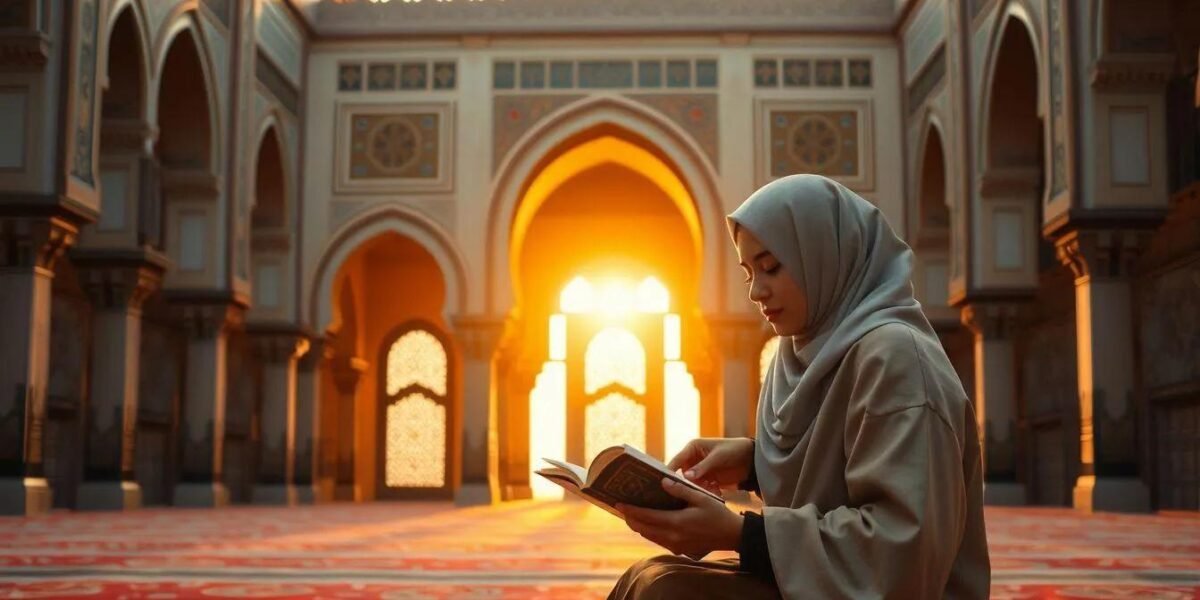
Ramadan is one of the most blessed and spiritually significant months in Islam. It is the ninth month of the Islamic lunar calendar and a period of fasting, prayer, patience, charity, forgiveness, and spiritual purification. Muslims around the world welcome this sacred month with happiness and devotion, as it provides an extraordinary opportunity to strengthen their relationship with Allah (SWT), seek forgiveness for their sins, and improve their character.
The importance of Ramadan is clearly established in the Holy Qur’an and the authentic Hadith of Prophet Muhammad (peace and blessings be upon him). Ramadan is not simply a month of abstaining from food and drink; it is a comprehensive spiritual training programme that teaches Muslims self-discipline, compassion, gratitude, righteousness, and responsibility towards others.
The Messenger of Allah (peace and blessings be upon him) explained the extraordinary blessings of this month and encouraged Muslims to take full advantage of its opportunities for worship and good deeds.
1. The Arrival of Ramadan: A Month of Blessings and Mercy
Ramadan is a special gift from Allah (SWT) to the Muslim community. It is a month in which the gates of Paradise are opened, the gates of Hell are closed, and the devils are chained.
Prophet Muhammad (peace and blessings be upon him) said:
“When Ramadan begins, the gates of Paradise are opened, the gates of Hell are closed, and the devils are chained.”
Reference: Sahih al-Bukhari, Hadith 1899; Sahih Muslim, Hadith 1079.
This Hadith highlights the extraordinary spiritual environment of Ramadan. It encourages Muslims to increase their good deeds, avoid sinful activities, and make sincere efforts to seek Allah’s mercy. The month creates an opportunity for believers to renew their faith and move towards a more righteous way of life.
2. Fasting: An Essential Act of Worship
Fasting (Sawm) is one of the five fundamental pillars of Islam. During Ramadan, adult Muslims who are obligated to fast abstain from food, drink, and marital relations from dawn until sunset, while maintaining good conduct and avoiding sinful behaviour.
Allah (SWT) states in the Holy Qur’an:
“O you who believe! Fasting is prescribed for you as it was prescribed for those before you, that you may become righteous.”
Reference: Surah Al-Baqarah, 2:183.
The Prophet Muhammad (peace and blessings be upon him) also explained the special reward associated with fasting. According to a Hadith Qudsi, Allah says:
“Every deed of the son of Adam is for him, except fasting; it is for Me, and I shall reward for it.”
Reference: Sahih al-Bukhari, Hadith 1904; Sahih Muslim, Hadith 1151.
This Hadith demonstrates the unique position of fasting among Islamic acts of worship. Fasting is not merely a physical exercise; it is an expression of sincere faith, obedience, patience, and devotion to Allah.
3. Ramadan: A Month of Forgiveness
One of the greatest blessings of Ramadan is the opportunity to receive forgiveness from Allah (SWT). Every believer makes mistakes, but Islam teaches that the door of repentance remains open for those who sincerely turn back to Allah.
Prophet Muhammad (peace and blessings be upon him) said:
“Whoever fasts Ramadan out of faith and in the hope of reward, his previous sins will be forgiven.”
Reference: Sahih al-Bukhari, Hadith 38; Sahih Muslim, Hadith 760.
In another narration, the Prophet (peace and blessings be upon him) explained that whoever stands in prayer during Ramadan with faith and the hope of reward will have their previous sins forgiven.
Reference: Sahih al-Bukhari, Hadith 37; Sahih Muslim, Hadith 759.
These teachings remind Muslims that Ramadan is an opportunity to abandon past mistakes, sincerely repent, improve their behaviour, and develop a stronger relationship with their Creator.
However, sincere repentance also requires abandoning wrongdoing and making a genuine commitment not to return to sinful actions. The rights of other people must also be respected and restored where necessary.
4. The Importance of Suhoor and Iftar
Suhoor is the pre-dawn meal consumed before beginning the daily fast, while Iftar is the meal with which Muslims break their fast at sunset.
The Messenger of Allah (peace and blessings be upon him) encouraged Muslims not to neglect Suhoor.
He said:
“Eat Suhoor, for in Suhoor there is blessing.”
Reference: Sahih al-Bukhari, Hadith 1923; Sahih Muslim, Hadith 1095.
This Hadith teaches that Suhoor is not simply a meal for physical strength; it is also an act associated with the blessings and traditions of Islam.
Regarding Iftar, the Prophet Muhammad (peace and blessings be upon him) said:
“The people will remain upon goodness as long as they hasten to break the fast.”
Reference: Sahih al-Bukhari, Hadith 1957; Sahih Muslim, Hadith 1098.
Muslims should therefore break their fast promptly after sunset, following the Sunnah of Rasulullah (peace and blessings be upon him).
5. Ramadan: The Month of the Holy Qur’an
Ramadan has a special relationship with the Holy Qur’an. It was during this blessed month that the Qur’an was revealed as guidance for humanity.
Allah (SWT) says:
“The month of Ramadan in which was revealed the Qur’an, a guidance for mankind and clear proofs of guidance and the criterion (between right and wrong).”
Reference: Surah Al-Baqarah, 2:185.
The Prophet Muhammad (peace and blessings be upon him) regularly recited and reviewed the Qur’an with Angel Jibreel (AS) during Ramadan.
Ibn Abbas (RA) reported:
“The Prophet (peace and blessings be upon him) was the most generous of all the people, and he used to become more generous in Ramadan when Jibreel met him.”
Reference: Sahih al-Bukhari, Hadith 1902.
This Hadith also describes how Angel Jibreel met the Prophet every night during Ramadan and reviewed the Qur’an with him.
Muslims should therefore make the Qur’an an essential part of their daily Ramadan routine. Reading, understanding, reflecting upon, and practising its teachings are among the most meaningful ways to benefit from this month.
6. Laylat al-Qadr: The Night Better Than a Thousand Months
One of the greatest blessings of Ramadan is Laylat al-Qadr (the Night of Decree). Allah (SWT) has given this night an extraordinary status.
The Holy Qur’an states:
“The Night of Decree is better than a thousand months.”
Reference: Surah Al-Qadr, 97:3.
The Messenger of Allah (peace and blessings be upon him) instructed Muslims to search for this blessed night during the final ten nights of Ramadan.
Aisha (RA) reported that the Prophet said:
“Search for the Night of Decree in the odd nights of the last ten days of Ramadan.”
Reference: Sahih al-Bukhari, Hadith 2017.
The Prophet (peace and blessings be upon him) also said:
“Whoever stands in prayer on Laylat al-Qadr out of faith and in the hope of reward, his previous sins will be forgiven.”
Reference: Sahih al-Bukhari, Hadith 1901; Sahih Muslim, Hadith 760.
Aisha (RA) once asked the Prophet what she should say if she encountered Laylat al-Qadr. He taught her this beautiful supplication:
اللَّهُمَّ إِنَّكَ عَفُوٌّ تُحِبُّ الْعَفْوَ فَاعْفُ عَنِّي
Allahumma innaka ‘afuwwun tuhibbul-‘afwa fa’fu ‘anni.
Meaning: O Allah, You are Most Forgiving, and You love forgiveness; so forgive me.
Reference: Jami’ at-Tirmidhi, Hadith 3513 (graded Hasan Sahih).
Muslims should devote the final ten nights to sincere prayer, Qur’an recitation, supplication, repentance, and remembrance of Allah.
7. Ramadan: A Month of Charity, Generosity, and Compassion
Islam teaches that Ramadan is not only a month of personal worship but also a month of generosity and social responsibility.
The Prophet Muhammad (peace and blessings be upon him) was exceptionally generous throughout the year, but his generosity increased during Ramadan.
Ibn Abbas (RA) narrated:
“The Messenger of Allah was the most generous of people, and he was even more generous in Ramadan.”
Reference: Sahih al-Bukhari, Hadith 1902.
This teaching encourages Muslims to help the poor, feed the hungry, support orphans, assist vulnerable families, and contribute to charitable causes.
The Prophet (peace and blessings be upon him) also said:
“Protect yourselves from the Fire, even if it is by giving half a date in charity.”
Reference: Sahih al-Bukhari, Hadith 1417; Sahih Muslim, Hadith 1016.
This Hadith demonstrates that even a small charitable contribution can be meaningful when offered sincerely for the sake of Allah.
Ramadan should therefore inspire Muslims to become more compassionate, generous, and responsible members of society.
8. The Importance of Good Character During Fasting
One of the most important lessons of Ramadan is that fasting must influence a person’s behaviour, attitude, and character.
A Muslim should avoid lying, backbiting, insulting others, spreading rumours, arguing unnecessarily, and engaging in harmful activities.
The Prophet Muhammad (peace and blessings be upon him) said:
“Whoever does not give up false speech and acting upon it, Allah has no need of his giving up his food and drink.”
Reference: Sahih al-Bukhari, Hadith 1903.
In another Hadith, the Prophet said:
“When one of you is fasting, he should not engage in obscene speech or raise his voice in anger. If someone insults him or fights him, let him say: ‘I am fasting.'”
Reference: Sahih al-Bukhari, Hadith 1904; Sahih Muslim, Hadith 1151.
These teachings demonstrate that the real purpose of fasting extends beyond physical hunger. It is an opportunity to develop patience, control anger, maintain honesty, respect others, and purify the heart.
A person who fasts but continues to harm others through words and actions has missed an important lesson of Ramadan.
9. Tarawih Prayer: Strengthening Faith Through Night Worship
Tarawih is a special voluntary night prayer performed during Ramadan. Muslims gather in mosques or pray individually to worship Allah and seek His blessings.
The Prophet Muhammad (peace and blessings be upon him) encouraged believers to perform night prayers during Ramadan.
He said:
“Whoever prays during Ramadan out of faith and in the hope of reward, his previous sins will be forgiven.”
Reference: Sahih al-Bukhari, Hadith 37; Sahih Muslim, Hadith 759.
Tarawih provides an opportunity to listen to the recitation of the Holy Qur’an, reflect upon its meanings, and strengthen one’s relationship with Allah.
Muslims should approach these prayers with sincerity, humility, and devotion rather than treating them as merely a social or cultural activity.
10. Feeding a Fasting Person: A Great Act of Charity
Feeding someone who is fasting is another beautiful expression of Islamic generosity.
The Prophet Muhammad (peace and blessings be upon him) said:
“Whoever gives food for a fasting person to break his fast will have a reward like theirs, without that detracting from the reward of the fasting person in the slightest.”
Reference: Jami’ at-Tirmidhi, Hadith 807 (graded Sahih).
This Hadith encourages Muslims to provide Iftar meals to family members, neighbours, travellers, poor people, and anyone who needs assistance.
Even a simple meal, a glass of water, or a few dates offered with sincerity can become a meaningful act of worship.
Ramadan reminds us that we should not forget people who struggle to afford their daily meals while we enjoy the blessings of food and shelter.
11. The Final Ten Days of Ramadan: A Time for Greater Devotion
The final ten days of Ramadan are particularly important because they contain Laylat al-Qadr. The Prophet Muhammad (peace and blessings be upon him) increased his worship during this period.
Aisha (RA) reported:
“When the last ten days of Ramadan began, the Prophet would tighten his waist-wrapper, stay awake at night, and wake his family.”
Reference: Sahih al-Bukhari, Hadith 2024; Sahih Muslim, Hadith 1174.
This Hadith teaches Muslims to make additional efforts during the final days of Ramadan. Rather than becoming less committed towards the end of the month, believers should increase their prayers, Qur’an recitation, charity, and supplications.
The final ten days also remind Muslims that the most valuable opportunities in life should never be wasted.
12. Zakat and Sadaqat al-Fitr: Sharing the Blessings of Ramadan
Ramadan is also a time to fulfil financial responsibilities towards the poor and needy.
Zakat is an obligatory act of worship for Muslims whose wealth meets the required conditions. Sadaqat al-Fitr (Zakat al-Fitr) is a specific obligatory charity connected with the completion of Ramadan.
Ibn Umar (RA) narrated:
“The Messenger of Allah made Zakat al-Fitr obligatory.”
Reference: Sahih al-Bukhari, Hadith 1503; Sahih Muslim, Hadith 984.
Zakat al-Fitr is intended to purify the fasting person from shortcomings in their fasting and to provide food for the needy. It should be given before the Eid prayer, according to the Prophetic teaching.
These Islamic obligations demonstrate that Ramadan is not only about individual spiritual development; it also promotes social justice, economic responsibility, and care for disadvantaged members of society.
13. Eid al-Fitr: Celebrating the Completion of Ramadan
Eid al-Fitr marks the completion of Ramadan and is a day of happiness, gratitude, and celebration for Muslims.
After a month of fasting, prayer, patience, charity, and spiritual reflection, Muslims gather to perform the Eid prayer, exchange greetings, visit family members, and share happiness with their communities.
The Prophet Muhammad (peace and blessings be upon him) established the Eid prayer as an important part of the Muslim celebration.
Ibn Umar (RA) narrated:
“The Messenger of Allah, Abu Bakr, and Umar used to offer the two Eid prayers before delivering the sermon.”
Reference: Sahih al-Bukhari, Hadith 963; Sahih Muslim, Hadith 888.
Eid is also an opportunity to strengthen family relationships, forgive one another, and remember those who are less fortunate.
However, the spiritual lessons of Ramadan should not disappear after Eid. Muslims should continue their good deeds, prayers, charity, and commitment to Islamic values throughout the year.
14. Maintaining the Lessons of Ramadan Throughout the Year
One of the greatest challenges for Muslims is maintaining the positive habits developed during Ramadan.
Ramadan teaches patience, self-control, kindness, generosity, discipline, and devotion to Allah. These qualities should become permanent parts of a Muslim’s character.
The Prophet Muhammad (peace and blessings be upon him) said:
“The most beloved deeds to Allah are those that are done consistently, even if they are few.”
Reference: Sahih al-Bukhari, Hadith 6464; Sahih Muslim, Hadith 783.
This Hadith provides an important lesson: Muslims should not restrict their worship and good behaviour to Ramadan alone.
Even after Ramadan, believers should maintain their five daily prayers, recite the Qur’an regularly, give charity, avoid sinful activities, and maintain good relationships with other people.
The real success of Ramadan is reflected in the positive changes that remain in a person’s life after the month has ended.
Conclusion: Ramadan Is an Opportunity to Transform Our Lives
Ramadan Mubarak is more than a traditional greeting exchanged among Muslims. It represents the arrival of a blessed month filled with opportunities for forgiveness, mercy, spiritual development, and closeness to Allah (SWT).
Through the teachings of Prophet Muhammad (peace and blessings be upon him), Muslims learn that Ramadan is a month of fasting, prayer, patience, charity, forgiveness, compassion, and good character.
The authentic Hadith of Rasulullah (peace and blessings be upon him) provide clear guidance on how to observe Ramadan meaningfully. They teach us that fasting is not simply about remaining hungry and thirsty; it is about controlling our desires, protecting our tongues, respecting others, helping the poor, and strengthening our faith.
Every Muslim should welcome Ramadan with a sincere heart, a clear intention, and a commitment to follow the Qur’an and Sunnah.
Let us use this blessed month to seek forgiveness for our sins, pray for our families, support the needy, strengthen our communities, and develop a closer relationship with our Creator.
May Allah (SWT) accept our fasting, prayers, charity, repentance, and good deeds. May He grant us the opportunity to witness Laylat al-Qadr and bless us with forgiveness, mercy, and guidance.
Ramadan Mubarak to all Muslims around the world.
May Allah accept our worship and make us among those who receive His mercy and forgiveness. Ameen.