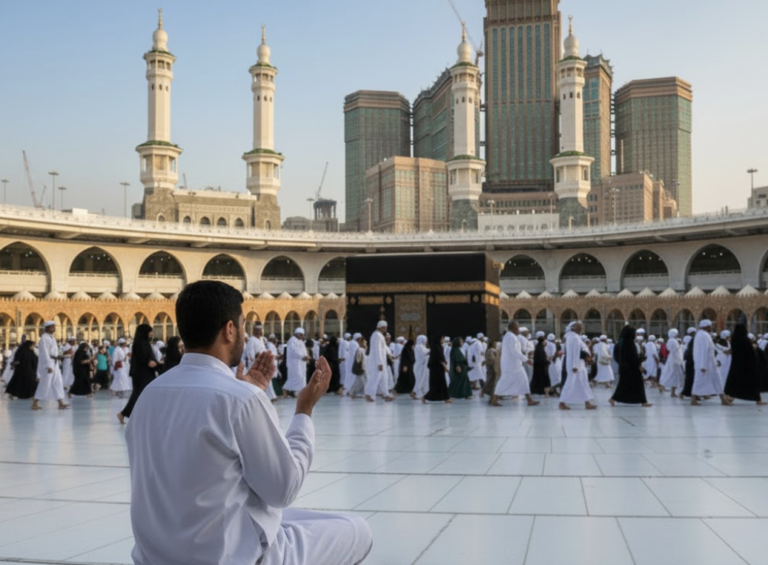
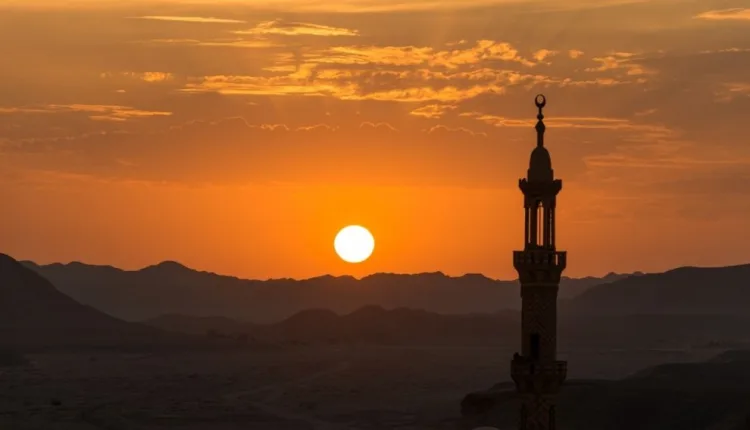
Hajj is the fifth pillar of Islam and one of the most important acts of worship for Muslims. Every adult Muslim who is physically and financially able must perform Hajj at least once in their lifetime. Each year, millions of Muslims travel to the Holy City of Makkah to fulfill this sacred obligation, demonstrating unity, equality, and complete submission to Allah.
Allah commands in the Qur’an:
“And Hajj to the House is a duty that mankind owes to Allah, for those who are able to find a way.”
(Surah Aal-Imran 3:97)
Hajj takes place during the Islamic month of Dhul Hijjah and consists of specific rituals, including Ihram, Tawaf around the Ka‘bah, Sa’i between Safa and Marwah, standing at Arafat, Muzdalifah, and the symbolic stoning of the pillars at Mina. Each ritual carries deep spiritual meaning, reminding Muslims of obedience, patience, sacrifice, and remembrance of Allah.
The Prophet Muhammad ﷺ said:
“Whoever performs Hajj and does not commit any obscenity or wrongdoing will return as pure as the day his mother gave birth to him.”
(Sahih al-Bukhari & Sahih Muslim)
Hajj strengthens faith, purifies sins, and renews spiritual commitment. Pilgrims dress in simple white garments, removing all signs of wealth and social status, symbolizing equality before Allah. This powerful gathering demonstrates global brotherhood and strengthens the unity of the Muslim Ummah.