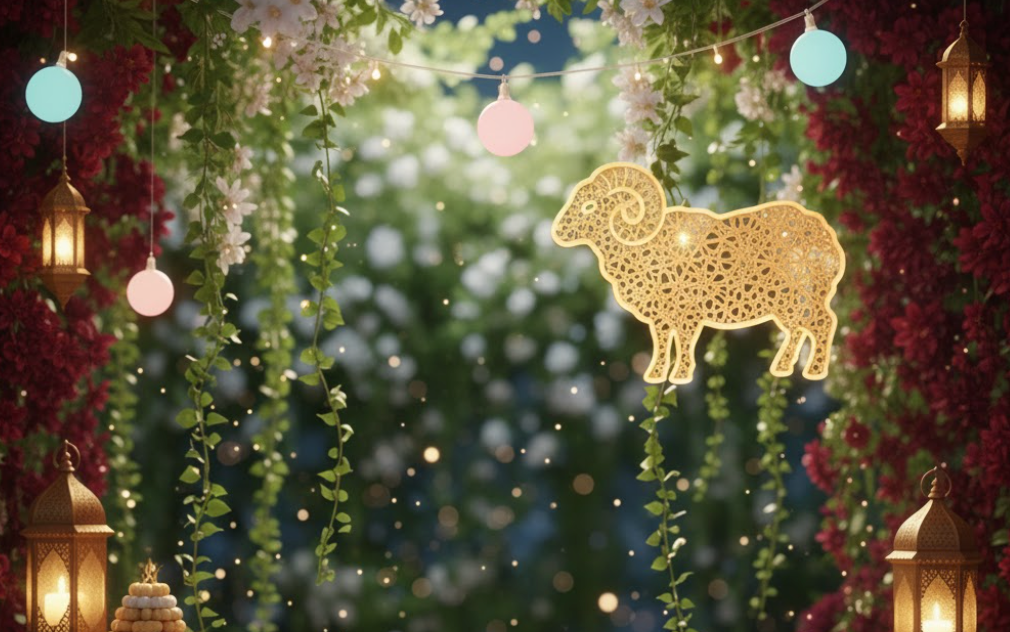
Eid al-Adha is one of the most sacred festivals in Islam and is observed during the Islamic month of Dhul Hijjah. It coincides with the annual pilgrimage (Hajj) in Makkah and commemorates the unwavering obedience of Prophet Ibrahim (peace be upon him). According to Islamic tradition, Ibrahim was commanded by Allah to sacrifice his beloved son as a test of faith. When he demonstrated complete submission, Allah replaced the son with a ram, showing divine mercy.
Muslims around the world perform a special Eid prayer followed by the ritual sacrifice of an animal such as a sheep, goat, cow, or camel. This sacrifice symbolizes devotion, gratitude, and willingness to give up personal desires for the sake of Allah. The meat is divided into three parts: one portion for the family, one for relatives and friends, and one for the poor and needy. This practice promotes sharing, generosity, and social justice.
Eid al-Adha teaches powerful lessons about sincerity, patience, humility, and trust in Allah. It reminds believers that true sacrifice is not only about the animal but also about surrendering ego, greed, and harmful habits. Families use this occasion to strengthen relationships, offer hospitality, and support those less fortunate.
Spiritually, Eid al-Adha connects Muslims with the legacy of Prophet Ibrahim and reinforces the value of submission to divine guidance. It inspires believers to live with integrity, compassion, and obedience in their daily lives.